
Small Spaces, Big Impact: Modern Luxury Interior Design for Compact Singapore Homes


The most common misconception about modern luxury is that it requires space. It doesn't. It requires precision.
In Singapore, where the median HDB flat is around 90–110 sqm and most condos run between 50–85 sqm, luxury interior design has had to evolve. The firms doing it well have learned that spatial intelligence — how you plan, proportion, and layer a compact space — matters far more than square footage.
Here's how we approach it.
Proportion Over Size
The first thing we do in any compact project is assess proportion. A 3-metre ceiling in a 50 sqm condo isn't a limitation — it's an opportunity. Floor-to-ceiling cabinetry draws the eye upward and makes the room read taller. A low-profile sofa makes a small living room feel more open. A full-height glass partition between living and dining zones creates separation without visual obstruction.
The mistake most people make is filling small spaces with too many pieces. In modern luxury design, restraint is the point. Fewer elements, better chosen, with more breathing room between them.
Material Quality Is More Visible in Small Spaces
In a large room, a cheap countertop or a poorly finished cabinet can be overlooked. In a compact space, everything is close and everything is seen. This is why material quality matters more, not less, in smaller homes.
We specify materials that reward close inspection: brushed stainless steel that catches light differently across the day, engineered stone with natural veining, solid timber edges on cabinetry rather than the PVC banding you see in budget carpentry. These details don't photograph dramatically — but they're what makes a space feel luxurious when you're actually living in it.
Custom Carpentry as the Foundation
In compact luxury homes, bespoke carpentry is not optional — it's the design. Every centimetre of storage needs to be optimised and every built-in needs to serve multiple functions. A TV console that doubles as a dining sideboard. A bed frame with integrated bedside shelves and concealed lighting. A study nook built into a corridor that would otherwise be dead space.
At The Design Factory, all carpentry is manufactured in our own workshop using E0-grade plywood. We design to exact millimetre specifications because in a compact space, the difference between a wardrobe that fits and one that doesn't can be 3 centimetres.
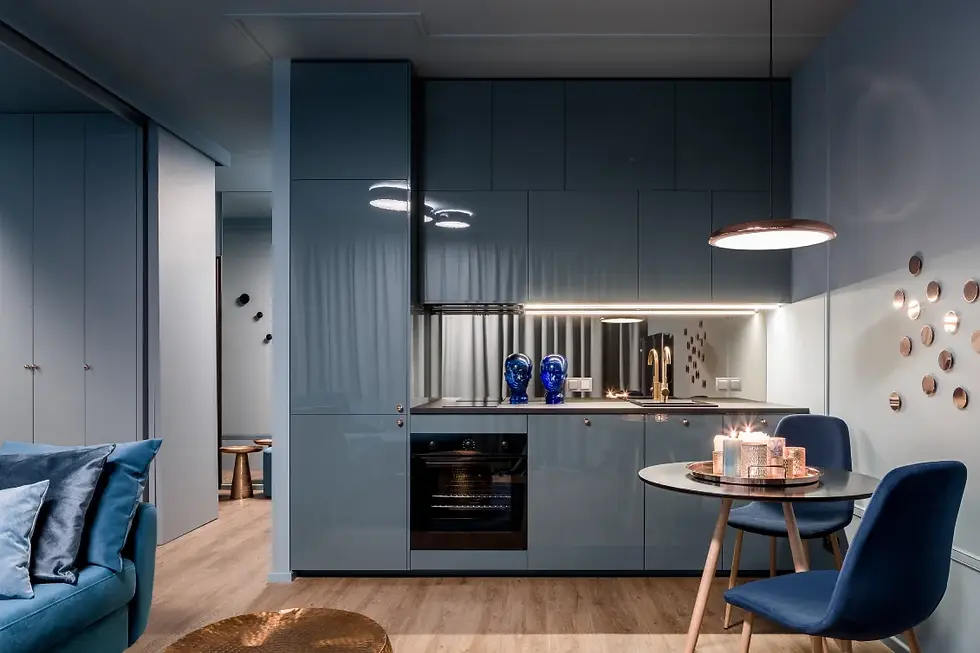
Lighting: The Most Underestimated Tool
Lighting in a compact luxury home works on three levels. Ambient lighting (cove or recessed) sets the base mood. Task lighting (under-cabinet, reading) serves function. Accent lighting (a single pendant, a picture light, a backlit niche) creates drama and draws attention to your best design decisions.
The combination of these three layers makes a 60 sqm condo feel considered and complete — not cramped. Get one of them wrong and the whole space suffers.
Colour and Visual Weight
Modern luxury in compact spaces favours a restrained palette — typically two to three colours, with one dominant neutral, one warm accent, and one architectural element in a stronger tone (often a feature wall or joinery detail). The goal is visual coherence, not visual excitement.
Dark tones in a compact space are not automatically a mistake — a deep charcoal feature wall behind a bed can make a small bedroom feel enveloping and considered, not claustrophobic. The key is controlling where the dark reads and ensuring enough light counterbalance.
The Projects That Taught Us the Most
Some of our most successful projects have been the most constrained — a 2-bedroom condo in Tanjong Pagar, a studio conversion in the CBD, a landed terrace house where the ground floor footprint was barely 70 sqm but needed to accommodate a family of four. The constraint forces discipline, and discipline produces better design.
See our residential portfolio and speak with Darren directly about your space. WhatsApp us here.
Frequently Asked Questions
Can modern luxury design work with resale HDB flats?
Yes. While structural limitations exist, clever space planning, layered lighting, and tailored finishes can transform older flats into contemporary, luxurious spaces.
Is modern luxury interior design always expensive?
Not necessarily. It’s about strategic choices—prioritising durable finishes, bespoke pieces where necessary, and optimising natural light. This approach ensures a luxurious outcome without overspending.
How do I balance minimalism with luxury in small spaces?
Minimalism keeps a home uncluttered, while luxury emerges from textures, curated décor, and layered lighting. Striking this balance requires careful curation rather than adding more items.
What role does sustainability play in luxury compact design?
Eco-friendly materials such as responsibly sourced wood, LED lighting, and energy-efficient appliances enhance both sustainability and luxury by providing long-term value.
Can I DIY modern luxury interior design, or do I need professional help?
While DIY methods can help with styling, achieving a cohesive modern luxury look in compact homes often requires professional expertise. Interior designers provide tailored layouts and material knowledge that elevate results significantly.


Comments